- DTL NAND Gate Definition: A DTL NAND gate is defined as a digital logic gate that uses diodes and transistors to produce a NAND logic function.
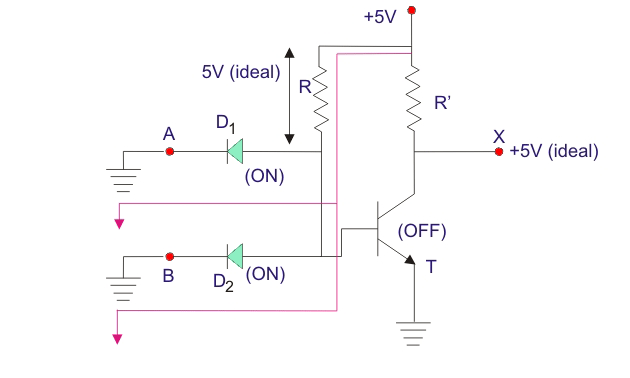
- Operation with 0V Inputs: When both inputs are 0V, the diodes are forward biased, keeping the transistor off and making the output high (1).
- Operation with Mixed Inputs: If either input is 0V, the output remains high due to the forward-biased condition of the diodes.
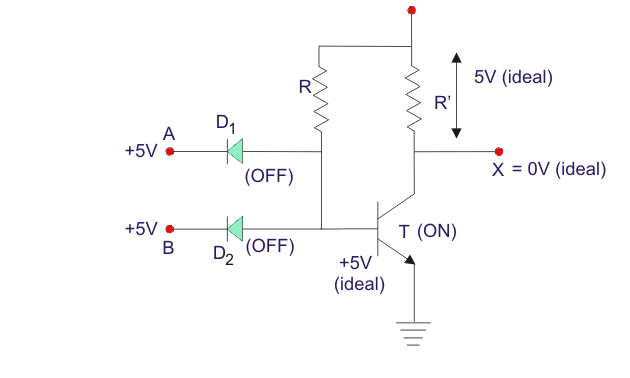
- Operation with 5V Inputs: When both inputs are 5V, the diodes turn off, the transistor switches on, and the output becomes low (0).
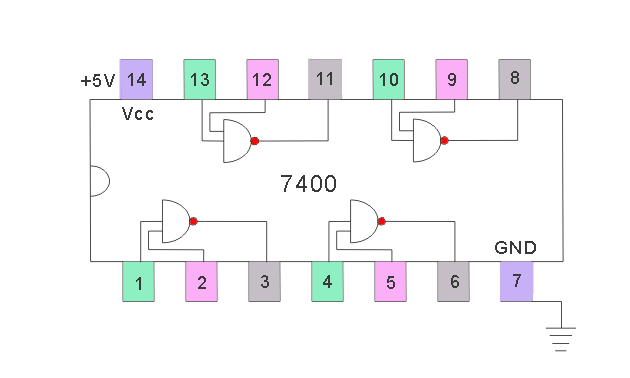
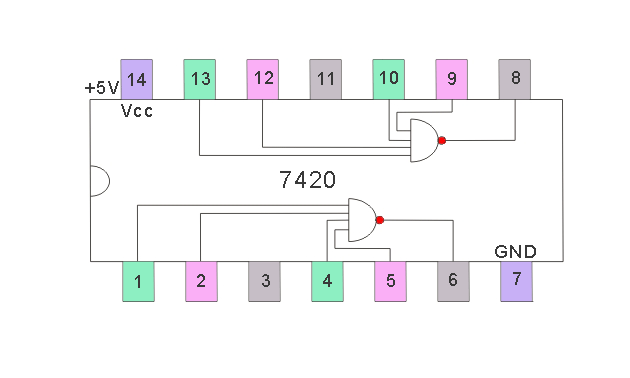
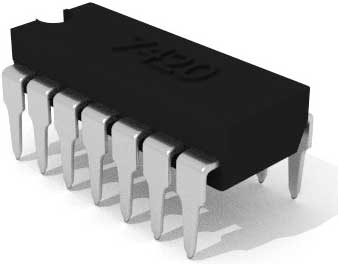
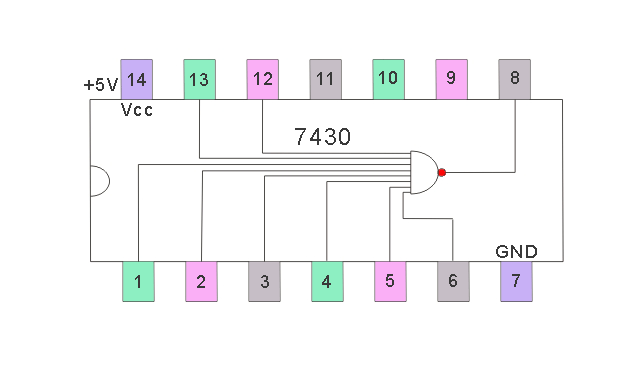
- NAND Gate ICs: IC7400, IC7420, and IC7430 are common NAND gate ICs, each with different input configurations for various digital logic applications.
Realizing NAND Gate using Diode and Transistor
A two-input NAND gate made with diodes and transistors is a DTL NAND gate, short for Diode Transistor Logic NAND gate.
When both inputs A and B are at 0 V, both diodes conduct. The supply voltage then has a path to ground through diodes D1 and D2, so the 5 V teaching supply drops across resistor R and transistor T stays off. Output X is then high, logical 1.

If either input at diode D1 and D2 is at 0 V, the supply still has a path to ground through that forward-biased diode. The output stays high, logical 1.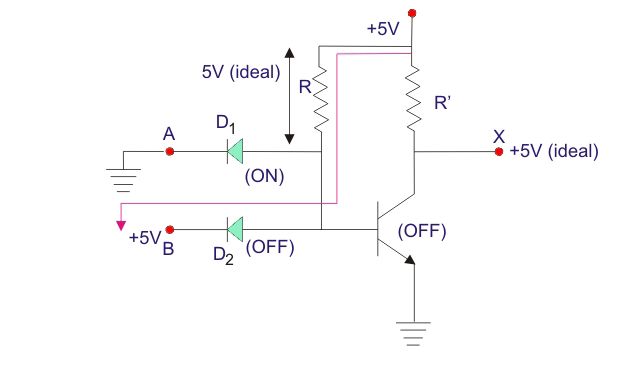
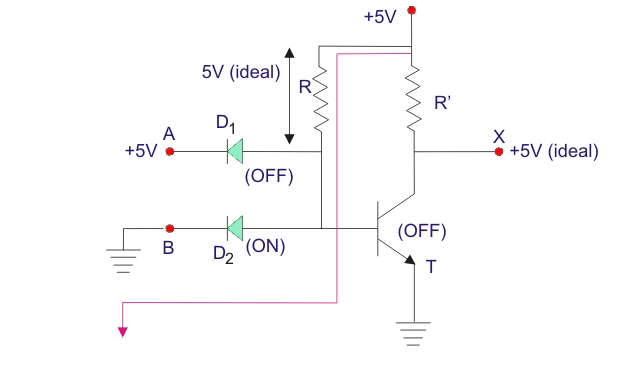
When both inputs are at +5 V (logical 1) in this teaching circuit, the diodes are reverse biased. The supply voltage can then reach the base of transistor T, turning it on and giving a path to ground. Nearly the full 5 V then appears across resistor R’, so output X is about 0 V, logical 0. The output is 0 only when both inputs are high.
NAND Gate ICs
The IC7400 is a 74-series NAND IC with four two-input NAND gates. The IC7420 has two four-input NAND gates and the IC7430 has one eight-input NAND gate.