- Electric Power Definition: Electric power is the rate at which an electrical circuit or component consumes or delivers energy over time.
- Calculation Method: The formula P = dW/dt, where dW is the energy in joules and dt is the time in seconds, calculates electric power.
- Usage Examples: Understanding electric power helps in assessing the efficiency of different devices and in calculating electricity bills.
- Passive Sign Convention: This convention determines the sign of power based on the direction of current and voltage polarity, indicating consumption or delivery.
- Practical Application: Examples like a resistor consuming power and a battery delivering power demonstrate the practical implications of electric power calculations.
Voltage and current are the two basic quantities in an electric circuit. Those voltage and current figures alone do not tell you how an electric circuit element uses energy. You also need the electric power that a circuit element can handle. A 60 watt electric lamp of the same type usually gives less light than a 100 watt lamp. An electricity bill charges for energy, that is electric power used over a stated period. Electric power ratings are used when you judge electric circuit or network loading and losses.
If an element supplies or consumes energy dw joules in time dt seconds, its power is
The same relation can be written from the definitions of voltage and current.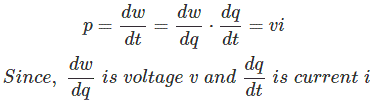
Voltage and current in that product are instantaneous, so the power is instantaneous and can change with time.
The instantaneous power of a circuit element is the product of the voltage across the element and the current through it.
A circuit element can absorb power or deliver power. A positive sign (+) marks absorbed power. A negative sign (-) marks power delivered by the element.
Passive Sign Convention
The direction of current, the polarity of voltage and the sign of power are tied together by the passive sign convention. When current enters an element at the terminal of positive voltage polarity, put a positive sign (+) before the product of voltage and current. The element then absorbs power from the electric circuit. When current leaves the element at the positive-voltage terminal, put a negative sign (-) before that product. The element then delivers power to the electric circuit.
Take a resistor across two circuit terminals. The rest of the circuit is omitted. The polarity of the voltage drop across the resistor and the current through it are shown below. The resistor consumes vi watts because current i ampere enters at the positive side of voltage v.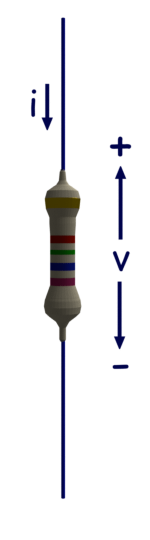
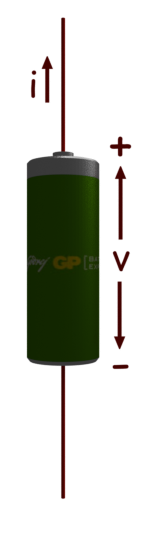
Now take a battery across two circuit terminals. The rest of the circuit is omitted. The polarity of the voltage drop across the battery and the current through it are shown below. If the battery delivers vi watts, current i ampere leaves the positive terminal of voltage v. If the figure instead shows current entering that positive terminal, the battery is absorbing power, for example while it is being charged.