- Diversity Factor Definition: Diversity factor is defined as the ratio of the sum of maximum demands of individual loads to the simultaneous maximum demand of the system.
- Importance of Diversity Factor: A high diversity factor means that a smaller electrical source can serve more loads, making it commercially viable.
- Peak Load Timing: Different types of loads (domestic, commercial, industrial, etc.) have peak demands at different times, which helps in managing the overall load on the system.
- Calculation Example: For a power transformer with industrial, domestic, and municipal loads, the diversity factor is calculated based on their maximum demands and the transformer’s maximum demand.
- Application in Electrical Systems: Understanding and applying the diversity factor helps in designing efficient and cost-effective electrical systems.
The diversity factor is the sum of the individual maximum demands of the loads, or feeders, on a system divided by the coincident maximum demand of that whole system. Individual peaks rarely fall in the same half-hour, so the coincident peak is usually smaller than the sum. A station or feeder can then be sized below that sum. Some storage now exists, such as batteries and pumped hydro, but most energy is still generated as it is used.
Take an electrical substation. The loads on it are often grouped as domestic, commercial, industrial, municipal, irrigation and traction. Their peaks do not usually coincide.
- Domestic loads include lights, fans, refrigerators, heaters, televisions, air conditioners and water pumps. The evening peak is common. Air-conditioning can also raise demand in the afternoon.
- Commercial loads include shop lighting and appliances in stores and restaurants. Demand is often high in both daytime trading hours and the evening.
- Industrial loads are motors and process plant. Many factories peak on weekday shifts, not in the residential evening.
- Municipal loads include street lighting and water-pumping stations. Street lights run at night. Pumping may follow reservoir or tariff schedules.
- Irrigation pumps often run in daytime hours, but night pumping is used where tariffs or water rules require it.
- Traction loads often rise at the start and end of the working day, when many trains accelerate together.
Because those peaks miss each other, the incoming transformer or line can be smaller than the sum of the downstream maximum demands.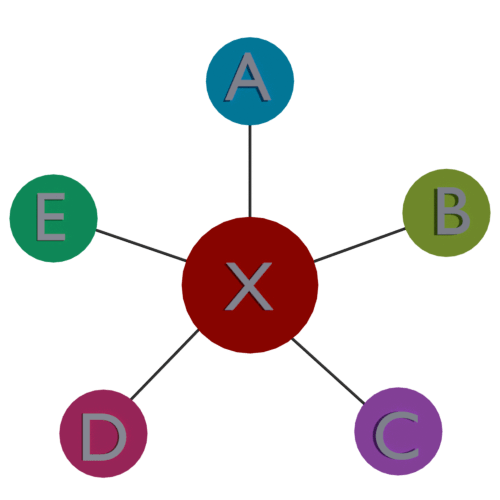
Call the sending substation X. Downstream substations A, B, C and E have individual maximum demands A, B, C and E megawatts. The formula image also includes a term D. The coincident maximum demand at X is X megawatts. The diversity factor of substation X is 
Diversity factor is at least 1. It equals 1 only if every individual peak falls in the same interval. A higher value means more unused headroom in the sum of peaks, so a given source can serve more customers.
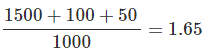
A worked power transformer example uses an industrial maximum demand of 1500 kW, a domestic demand of 100 kW and a municipal demand of 50 kW. The coincident maximum demand on the transformer is 1000 kW. The diversity factor of the transformer is then (1500 + 100 + 50) / 1000 = 1.65, as in