

Key learnings:
- Electrical Grid System Definition: An electrical grid system is defined as a network connecting multiple power-generating stations at a specific transmission voltage level.
- Increased Reliability: An interconnected grid boosts the reliability of the power system by sharing loads in case of generating station failures.
- Load Sharing: The grid system can exchange peak loads, reducing the need for partial load shedding or increasing the generating station’s capacity.
- Use of Inefficient Plants: Old, inefficient plants can be used temporarily to meet excess demand, preventing them from being idle.
- Consistency and Economy: The grid covers more consumers, resulting in consistent load and economical electricity generation.
An electrical grid system is the network that moves power from generating stations to substations and then toward customers. Several stations are tied together on transmission lines, often at more than one voltage. The “network topology” can be a ring, a mesh or radial feeders. Choice depends on load, generation, money and reliability. Land and terrain still set much of the route.
Tying stations together costs money. Protection, switching and control all get harder. Isolated power stations avoid that cost but cannot borrow spare generation from a neighbour. Modern systems still interconnect because the operating gains usually outweigh the extra plant. The usual gains are listed below.
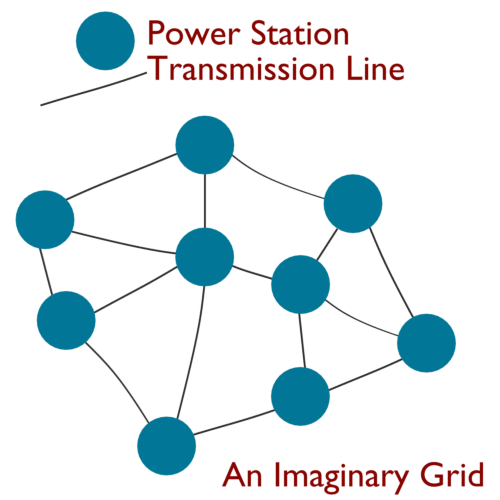
- An interconnected grid can raise reliability. If one station trips, other stations can pick up its load, provided the remaining machines and the lines have spare capacity. Transmission limits and rare wide-area faults still matter.
- Peak load can be shared. An isolated station that is short of plant must shed load. On a grid, a neighbour can export power if the interconnector is free. Transfer limits and a system-wide shortage still force cuts.
- Older, high-cost plant can sit as reserve and run only on a few peak hours. Operators still use this to cover a short spike without building new baseload. Emissions rules and fuel price now retire many of those units instead.
- A grid serves more customers than one isolated station. Random swings in small groups cancel in a large mix, so the remaining load is smoother. Units can then be sized to run near full output for more hours of the day, which lowers the cost per kilowatt-hour. Very large weather events can still move the whole region together.
- Interconnection also improves the diversity factor seen by each station. The share of system peak that one machine must cover is usually smaller than the peak that same machine would face if it supplied only its local town.


