- Boiler Firing Definition: Boiler firing is the process of burning fuel in a steam boiler furnace to produce heat and maintain the desired temperature.
- Solid Fuel Firing: Involves using either hand firing or mechanical stoker systems to burn coal in the boiler.
- Mechanical Stoker Systems: Two types include underfeed mechanical stoker and travel grate stoker, each with unique combustion processes and handling methods.
- Pulverized Fuel Firing: A modern method where coal is ground into fine powder, mixed with air, and burned efficiently in the furnace.
- Pulverization Process: Includes crushing coal, removing impurities, drying, and grinding into fine particles for efficient combustion.
Boiler firing supplies fuel and combustion air to the boiler furnace. Good combustion requires enough air, effective mixing and residence time, but excess air must also be controlled because it carries heat up the stack.
The firing system must match fuel properties and the required steam output of the steam boiler.
This article limits its discussion of methods of firing steam boilers to coal. Two broad methods of firing steam boilers covered here are grate-based solid fuel firing and suspension-based pulverized fuel firing.
Other boiler fuels and firing technologies use different equipment.
Two basic forms of grate-based solid fuel firing are listed below.
- Hand Firing
- Mechanical Stoker Firing
In a hand firing system, an operator places sized coal on the grate and manages the fuel bed manually. It is associated with small or historical installations, including some steam locomotives. Combustion and emissions depend heavily on fuel distribution, bed condition and air control.
Mechanical Stoker Firing
A mechanical stoker meters coal into the steam boiler furnace and manages its movement on or through a grate. This is called mechanical stoker firing. Underfeed, overfeed and spreader designs are recognised categories; the following mechanical stoker firing examples cover an underfeed stoker and a travelling-grate overfeed stoker.
Under Feed Mechanical Stoker Firing
An underfeed stoker pushes fresh coal into a retort beneath the active fuel bed by ram or screw. Primary air enters through tuyeres or grate openings, while overfire air above the bed helps burn released volatile gases. The new coal heats as it moves upwards and outwards through the burning bed.
Ash moves towards the sides or discharge point according to the stoker design. Fine ash can leave the furnace with the flue gas, but it must pass through the boiler and required particulate controls before the gas reaches the stack. Complete volatile combustion depends on temperature, mixing, residence time and air distribution.
Travel Grate Stoker Solid Coal Firing
A travelling-grate stoker feeds coal onto one end of a moving chain or belt grate. As the grate carries the fuel through the furnace, the bed passes through heating, ignition, combustion and burnout zones. Grate speed, bed depth and underfire air distribution control the burning rate. Bottom ash drops from the discharge end, while entrained fly ash travels with the flue gas to downstream collection equipment.
Pulverized Fuel Firing
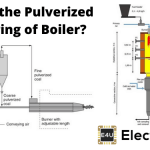
Pulverized-fuel firing grinds coal into a fine powder and carries it with primary air through burners. The particles burn mainly in suspension, giving a large reaction area and allowing closely controlled fuel and air flow. Pulverization does not increase the coal’s calorific value.
A pulverized coal firing system can achieve high combustion rates and suit large units, but the overall efficiency of a steam boiler still depends on excess air, unburnt carbon, flue-gas temperature, heat transfer and auxiliary power. It does not reduce the theoretical air or fuel required for a given heat input. Fuel preparation, milling, conveying and burner controls also add complexity.
A pulverized coal firing system therefore has these practical limitations:
- Mills, classifiers, burners, ducts and controls add capital cost compared with a simpler grate system.
- Pulverizers, primary-air fans and fuel-handling equipment consume auxiliary power and require maintenance.
- Stack heat loss depends on flue-gas temperature and excess-air flow; it is not an unavoidable result of pulverized firing alone.
- This method of boiler firing handles combustible coal dust. Safe design and operation must control ignition sources, dust accumulation and explosive fuel-air mixtures.
- Much of the mineral residue leaves as fly ash, so high-efficiency particulate collection and ash handling are normally required.
Pulverization Process
A typical direct-firing preparation route is outlined below. Exact equipment, particle size and moisture targets depend on the coal and mill design.
- Raw coal is crushed and screened to the feed size accepted by the selected pulverizer.
- Tramp-metal magnets and detectors protect downstream conveyors and mills from metallic debris.
- Hot primary air dries the coal as needed for stable mill output and transport. The target moisture is fuel-specific rather than a universal value below 2%.
- A ball, roller or bowl mill grinds the coal. A classifier returns oversized particles and sends suitably fine material onwards.
- Primary air conveys the pulverized coal to the burners, where it mixes with additional combustion air and enters the furnace as a particle-laden gas stream.